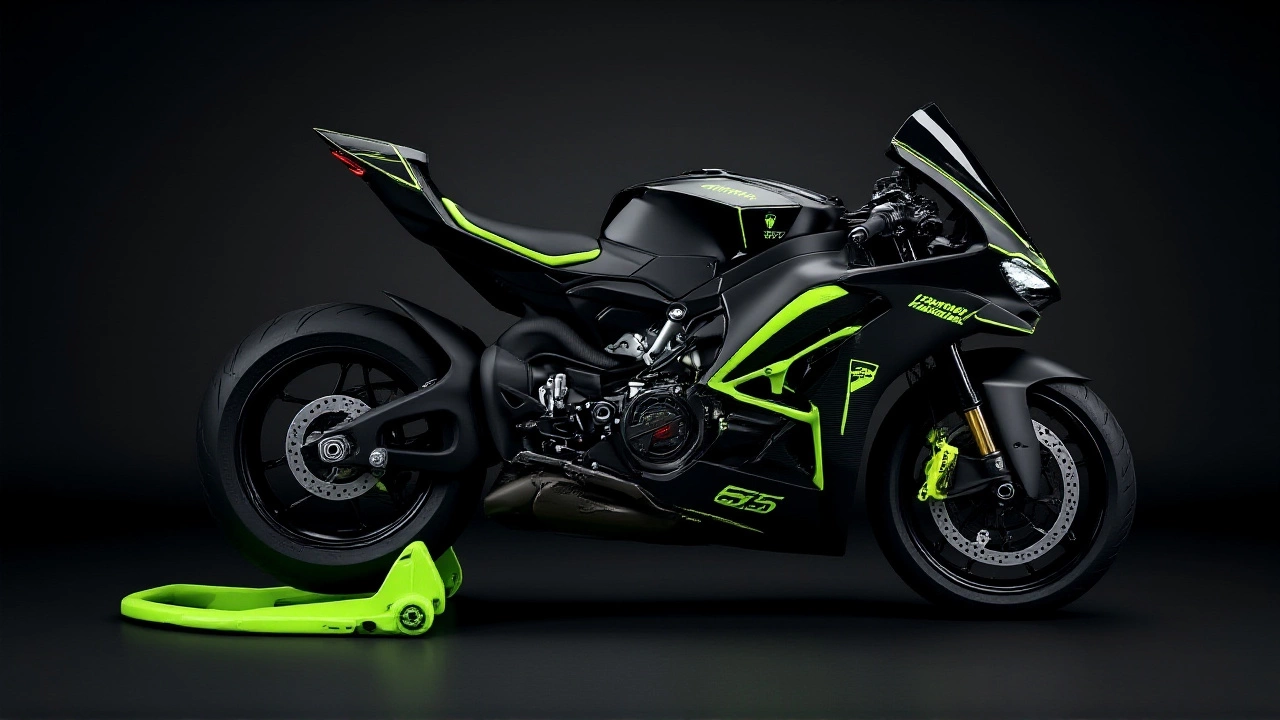
When Ducati handed over the keys to its ultra-exclusive Panigale V4 Lamborghini in Mumbai, it wasn't just another bike handover. It was a statement. The first—and reportedly only—unit allocated for India has officially been delivered, marking a rare moment where Italian engineering meets Indian wealth in the most dramatic way possible.
The twist? You can’t buy one. Not anymore. Ducati built only 630 numbered units globally, plus 63 special "Speciale Clienti" editions reserved exclusively for existing Lamborghini car owners who wanted their two-wheeler to match their four-wheeler’s paint job. Every single unit sold out before launch. Yet here we are, watching history unfold on the streets of Mumbai.
A Billion-Rupee Bike Enters India
Here’s the thing about luxury motorcycles: they’re not just transport. They’re trophies. And this one costs exactly ₹1 crore ex-showroom in India. That’s roughly $120,000 USD. Add road tax and insurance, and you’re looking at over ₹1.1 crore on-road depending on your city. In Phek, Nagaland, data shows an on-road price of ₹1,09,72,579—including ₹6.5 lakh in RTO fees and ₹2.22 lakh in insurance. Similar figures appear in Mamit, Mizoram, while North Sikkim lists it closer to ₹1.02 crore.
But numbers don’t tell the whole story. This isn’t just any Panigale V4. It’s a collaboration between two automotive legends—Ducati and Lamborghini—designed to celebrate their shared heritage under Audi ownership. Think carbon fiber everywhere, titanium exhaust from Akrapovič, and suspension so advanced it adjusts itself mid-corner using Öhlins Smart EC 3.0 technology.
Oddly enough, despite being based on the already impressive Panigale V4 S, this version sheds 2kg through strategic use of lightweight materials. Result? A curb weight of just 185kg dry. Combined with output ranging between 216–218 horsepower (depending on source), that gives it a power-to-weight ratio hovering around 1.17–1.18 hp/kg. Translation? It feels lighter than air when you twist the throttle.
Why Only One Unit Made It to India?
You might wonder why only one unit was allocated to India. Turns out, demand didn’t drive supply—it capped it. Ducati produced exactly 630 standard units worldwide, each individually numbered like fine art pieces. Then came the 63 Speciale Clienti models, custom-painted to match specific Lamborghini supercars owned by select clients. These weren’t available to the public—they were gifts, essentially, for loyal customers.
In India, reports confirm just one allocation. No second chance. No waiting list. If you missed it, you’re out. As Navbharat Times noted, “All units booked even before delivery began.” LiveHindustan added that every buyer received their machine inside a bespoke wooden crate complete with certificate of authenticity—a touch more fitting for a museum piece than a daily rider.
So what does this mean for Indian enthusiasts? For now, nothing practical. But symbolically? Huge. It signals that India is no longer ignored by global luxury brands. We’re part of the conversation—even if we get the last slice of cake.
Performance Meets Prestige
Underneath all the glamour lies serious machinery. At its heart beats the 1,103cc Desmosedici Stradale V4 engine—the same mill found in MotoGP-derived machines. With dedicated calibration and an approved Akrapovič titanium silencer featuring carbon end caps, peak power hits 218.5 bhp at high revs, while torque peaks at 122.1 Nm.
Suspension comes courtesy of Öhlins NPX-30 pressurized front forks and TTX 36 rear shock, all managed electronically via the Smart EC 3.0 system. Braking duties fall to high-end radial-mount calipers, complemented by ride modes including Race eCBS and Ducati Vehicle Observer—tech originally developed for track days but now trickling down to street-legal hyperbikes.
Even small details scream exclusivity: adjustable footpegs, billet aluminum counterweights, a 17-liter aluminum fuel tank, and fully customizable lever positions. Nothing feels mass-produced. Everything feels intentional.

What’s Next for Luxury Motorcycles in India?
This delivery marks more than a sale—it sets a precedent. Other manufacturers will take note. When a brand like Ducati dares to bring a ₹1 crore motorcycle into India and sees immediate uptake, others may follow suit. Expect limited-run collaborations, higher pricing tiers, and increased focus on premium segments among both domestic and international players.
For collectors, this model will likely appreciate quickly. Limited production runs + celebrity endorsements + media buzz = future investment potential. Already, forums buzz with speculation about resale values climbing well above original MSRP within five years.
Meanwhile, everyday riders can rest easy knowing these beasts won’t clog traffic jams anytime soon. Their presence remains ceremonial—more red carpet than commute lane.
Frequently Asked Questions
How much does the Ducati Panigale V4 Lamborghini cost in India?
The ex-showroom price is set at ₹1 crore ($120,000). On-road prices vary by location due to differing taxes and insurance rates. In cities like Phek and Mamit, total costs reach approximately ₹1.09–1.10 crore after adding RTO charges (~₹6.5 lakh) and comprehensive insurance (~₹2.22 lakh).
Was only one unit delivered in India?
Yes, according to multiple sources including Navbharat Times and LiveHindustan, only one unit was allocated and subsequently delivered in Mumbai. All other global allocations had already been claimed prior to official launch, making this the sole representative in the country.
Can I still order a Ducati Panigale V4 Lamborghini?
No. Production ended after 693 total units (630 regular + 63 Speciale Clienti). There are no plans for reissue or additional batches. Any listings claiming availability should be treated with skepticism unless backed by verifiable documentation from authorized dealers.
What makes this bike different from regular Panigale V4 models?
Beyond branding, key differences include reduced weight (185kg vs ~187kg), upgraded Akrapovič titanium exhaust, exclusive color schemes tied to Lamborghini vehicles, enhanced electronic controls, and individual numbering certificates. Each unit arrives packaged in a custom wooden crate with authenticity paperwork.
Who bought the Indian unit?
The identity of the buyer hasn’t been publicly disclosed. However, industry insiders suggest the purchaser belongs to India’s top-tier collector community—individuals known for acquiring limited-edition automotive artifacts rather than practical transportation solutions.